
First hour on site: $80–$180
Covers getting a licensed plumber to you and starting the work. Ask before booking, not after the invoice arrives.
Hot water that has given up, a mixer that drips, a toilet that runs, a leak showing on a wall, a gas appliance that needs connecting properly. All of it is licensed work, all of it is what we do, and you get the number before anyone picks up a tool.
Licensed plumbing covers far more than most people picture. Water supply and drainage inside the property, hot water units and their valves, tapware and toilets, gas appliance connections, stormwater pits and downpipes, and every fixture position behind a renovation are all inside it, and all of it carries a licence requirement in NSW.
Knowing that is genuinely useful when you are choosing who to call. A handyman may not legally touch gas, and stormwater is plumbing rather than landscaping. Asking for a licence number before anyone starts takes thirty seconds and rules out the jobs that have to be done twice.


A tank or heat pump mounted on an exposed elevation near the water works harder for its life than the same unit two streets inland. Casings corrode, anodes go faster, and the sacrificial parts that protect a tank need checking sooner than the manual suggests.
The cheap intervention is the anode. Checked at the right interval it can add years to a tank; ignored, it is the reason a unit that should have lasted a decade needs replacing at seven.
Darling Point’s grand apartment blocks share drainage lines, so blockages need a camera to diagnose and the right access to clear properly.
In a strata building the dividing line is usually whether the pipework serves your lot alone or more than one. A branch inside your walls feeding only your bathroom is generally yours; the stack it joins, and anything in common property, generally is not.
Getting that settled before the work starts is what stops an invoice becoming an argument. We are used to writing it up so the strata manager has what they need, and we would rather spend ten minutes on it up front than have you chasing reimbursement for a month.
Many stately older homes still run on original clay and earthenware pipes that are prone to cracks, sags and collapses over time.
The skill on a period property is not the plumbing, it is getting to it. Lath and plaster, original tiling, pressed metal, tessellated verandah floors and cedar joinery are all things that cost far more to reinstate than the repair underneath them costs to complete.
So the sequence matters: locate precisely first, open the smallest possible area, and agree what gets cut before anything does. Detection gear earns its keep here more than anywhere else.
Water moving downhill fast is not automatically good. On a steep run the liquid can outrun what it is carrying, and the solids settle at the first flat section rather than continuing. That is why a fault on a sloping block often recurs at the same point regardless of how careful the household is.
It is a gradient problem, not a usage problem, and no amount of careful flushing fixes it. Seeing the profile of the line is what turns it into a defined repair instead of an annual visit.
Licensed plumbing work in NSW gets a Certificate of Compliance, and drainage work is notified to the water authority. It is not paperwork for its own sake: it is what a conveyancer, an insurer or the next buyer asks for when a line is queried.
Keep them with the property file along with any camera footage. On older pipework it is genuinely valuable to be able to show what was found, what was done and when, rather than starting the argument from scratch at sale time.
Streets sloping toward the harbour can send heavy rain rushing into pits and lines, when they’re blocked, water backs up fast. We keep them flowing.
Proximity to open water shortens the life of anything metal outside: tap spindles, external copper, hot water unit casings and the fixings holding them up. It is a slow, even process rather than a dramatic failure, which is why it tends to be noticed all at once.
Specifying for the environment costs very little at the point of installation and a great deal afterwards. Where a fitting will live outside near the water, it should be chosen for that from the start.
Covers getting a licensed plumber to you and starting the work. Ask before booking, not after the invoice arrives.
Business hours across Sydney in 2026. Out-of-hours work costs more for the obvious reason and should be disclosed up front.
One fixture, one visit, minor parts included. Taps, toilets, valves and the flexible hoses that quietly fail.
Elements, thermostats, tempering valves and anodes. Worth doing on a tank with years left, not worth doing on one that is corroded through.
Renovation rough-in, gas work and excavation get a written number before a tool comes out, not an estimate that drifts.
Figures reflect the 2026 Sydney market rather than a quote. You get your own number, in writing, first. Figures here are indicative of the 2026 Sydney market rather than a quote from us, you get your own number as a fixed price before any work starts.
One call reaches someone who can tell you what it probably is and what it is likely to cost, including when the honest answer is that it can wait until the week.
The nearest available crew covers Darling Point and the streets around it, stocked for the faults this housing stock actually produces rather than a generic van fit-out.
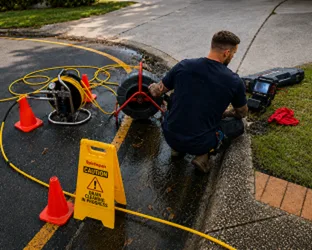
You see what failed and why, and you get one fixed number covering the repair. If opening it up changes the job, you hear that then and not later.

Completed, tested, tidied, and documented where NSW requires a compliance certificate for the work carried out.
Describe it and we will tell you whether it is a plumber, a gasfitter or neither, and whether it is worth doing today or booking for the week.
Straight answers on licences, cost, urgency and what happens on the day.

Ring us and a tradesperson picks up. Or leave your details and we will call back with a window we can actually meet.

Leave your details and our local Darling Point team will call you back fast.